Finding the perfect pair of jeans can make a big difference in both comfort and everyday style. With so many fits, rises, colors, and fabrics available, choosing the right men’s jeans can sometimes feel confusing. The good news is that understanding your body proportions and knowing the different jeans fits can make shopping much easier.
Here’s a simple guide to help you choose the perfect jeans for your body type.
1. Understand Your Body Proportions
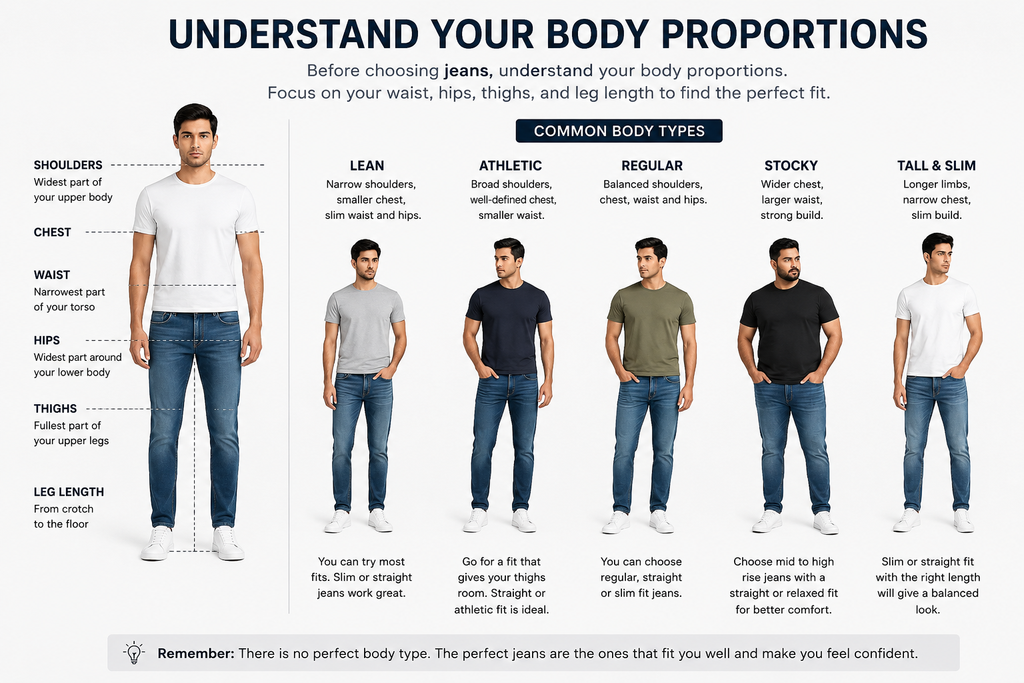
Before choosing jeans, consider your overall proportions rather than focusing on specific body features. Think about your waist, hips, thighs, and leg length. The goal is to find jeans that feel comfortable and allow you to move easily while creating a balanced overall look.
Remember, there isn’t one “perfect” body type for wearing jeans. The best pair is one that fits comfortably and matches your personal style.
2. Choose the Right Jeans Fit
The fit of your jeans is one of the most important factors to consider.
Slim Fit: Slim-fit jeans follow the shape of your legs without being extremely tight. They are a versatile choice for casual and smart-casual outfits.
Straight Fit: Straight-leg jeans maintain a relatively consistent width from the thigh to the ankle. They offer a classic appearance and are suitable for many different outfits.
Relaxed Fit: Relaxed jeans provide additional room around the seat and thighs. They can be a comfortable option for everyday wear.
Regular Fit: Regular-fit jeans provide a balanced amount of room without looking overly loose or tight, making them a dependable everyday choice.
Baggy or Loose Fit: These jeans offer a more spacious silhouette and are popular for casual and streetwear-inspired outfits.
3. Pay Attention to the Rise
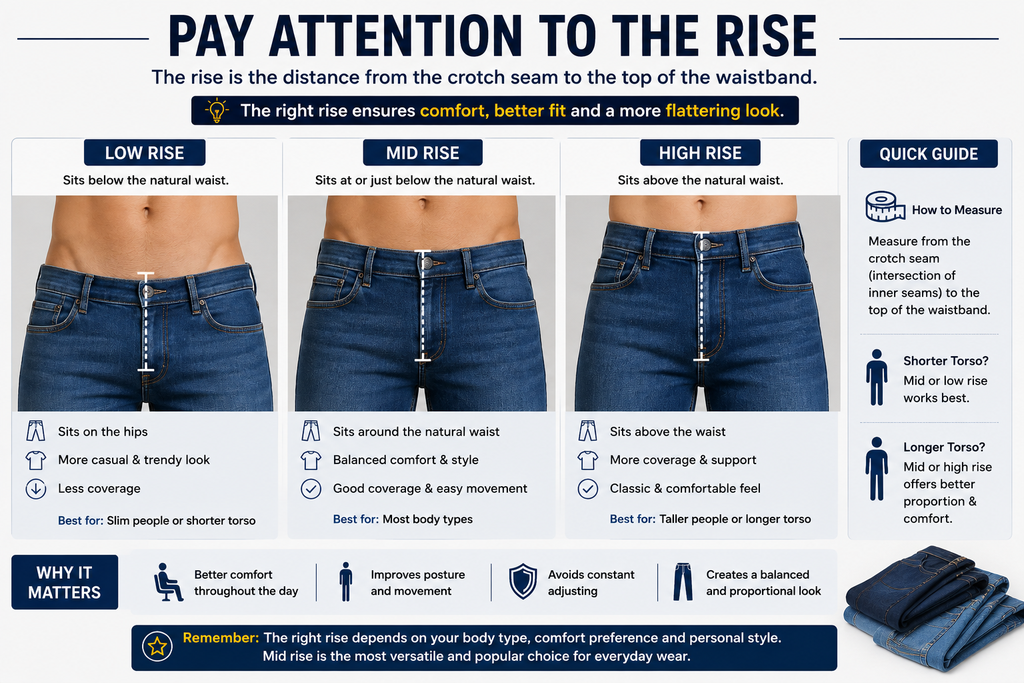
The rise of jeans refers to the distance between the crotch and the top of the waistband.
Low-rise jeans sit lower on the waist, while mid-rise jeans generally sit around the natural waist area. High-rise jeans sit higher on the waist.
For everyday wear, mid-rise jeans are a popular choice because they can provide a comfortable balance between coverage, movement, and style.
4. Pick the Right Length
Jeans should generally have a length that works well with your footwear and preferred style. If the jeans are too long, they may bunch excessively around the ankles. If they are too short, they may create an unwanted gap above your shoes.
For a cleaner appearance, look for a length that sits naturally around your footwear without excessive fabric pooling.
5. Consider the Fabric
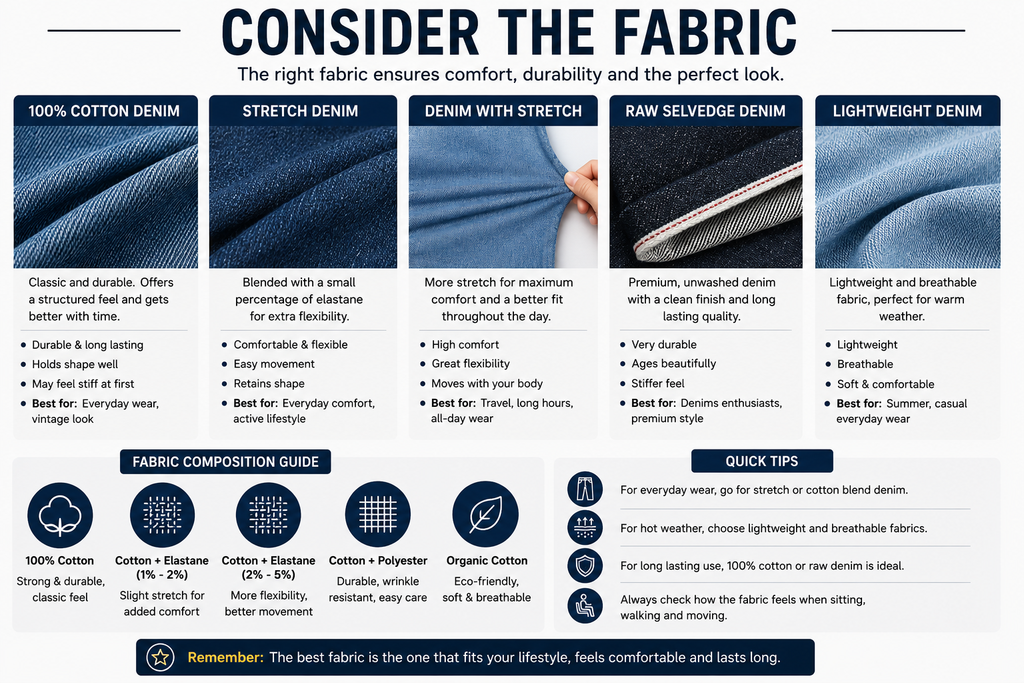
Fabric affects both comfort and durability. Traditional denim can provide a structured feel, while jeans containing a small amount of stretch material can offer additional flexibility.
For everyday use, consider a fabric that feels comfortable when sitting, walking, and moving throughout the day.
6. Choose a Color That Matches Your Wardrobe
Dark blue and black jeans are versatile options that can work with shirts, T-shirts, jackets, and casual footwear. Light-wash jeans can create a more relaxed appearance, while medium washes offer a balance between casual and versatile styling.
If you’re buying your first few pairs, choosing versatile colors can make it easier to create different outfits.
7. Always Prioritize Comfort
Style matters, but comfort should come first. Try sitting, walking, and moving around when checking the fit. The waistband should feel secure without being uncomfortably tight, and the jeans should allow natural movement.